
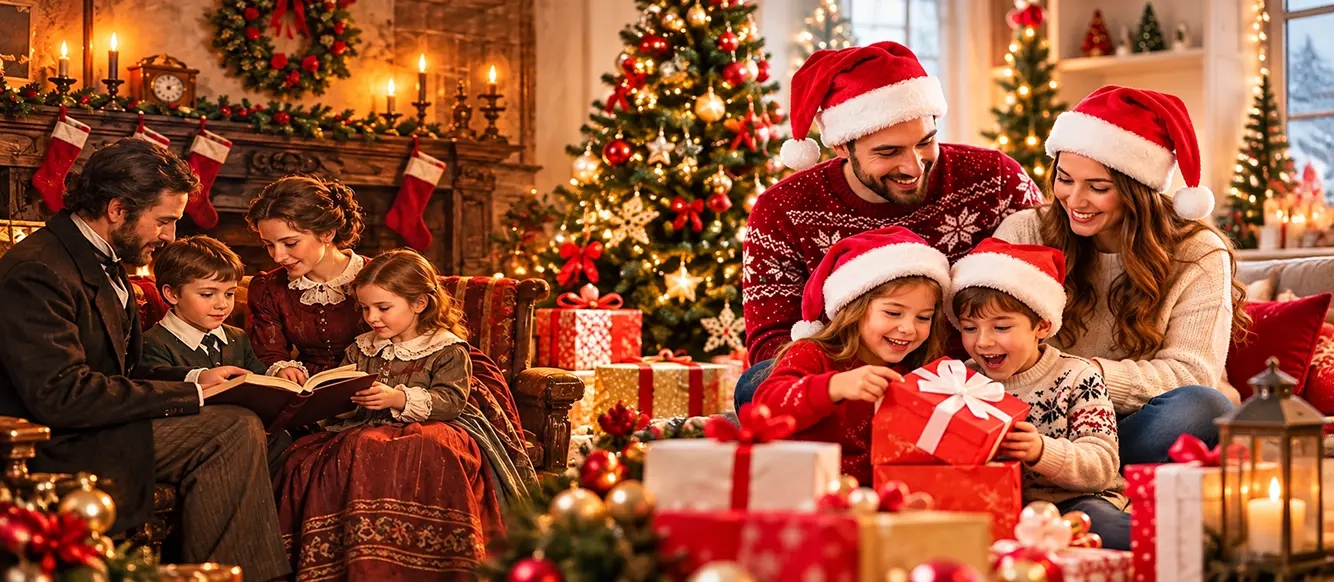
There are many Christmas traditions we look around the world for, right? Now, this time of the year there are many new traditions we look at, but when we go into the past decade, there is a very good tradition that people enjoy in the past, and in the present anyone doesn’t know this cultural tradition. When people know this cultural event, then they do more this Christmas. We are here with the new and the past Christmas traditions. Let’s check this cultural and present tradition in this New Year.
According to Christian theology, the Christmas holiday commemorates the birth of Jesus Christ of Nazareth. Whose teaching is the basis of the Christian faith. Christmas didn’t begin with celebrating Christ’s birth until the third century. A.D., when the church officials settled on December 25, probably to coincide with the already existing pagan winter festival. Today, Christmas is not the most important Christian holiday; in fact, it ranks fourth after Easter, Pentecost, and Epiphany. Yet, since the 19th century. When the Americans start to celebrate Christmas in the way we think of it today. Including traditions such as decorating trees, sending holiday cards and giving gifts, it has grown into the biggest commercial holiday of the year and is now celebrated by the vast majority of Americans, no matter what they are or whether they are Christian or not.
There are many surveys done by researchers at Christian Christmas. According to the few research centre surveys, which polled 2001 American adults earlier this month, fully eight out of every 10 non-Christians celebrate, with most viewing it as a cultural holiday rather than a religious occasion. On this Christmas Day, while 96 per cent are proven to celebrate Christmas, only two-thirds of them view it as a religious holiday. In total, 31 per cent of Americans who celebrate Christmas see the holiday as religious, while one-third view it as more of a cultural holiday. Most of the Americans are celebrating Christmas Day; that doesn’t matter if they are Christians or not.
Younger adults were much less likely than older adults to view Christmas as a religious occasion and to incorporate religious elements into their celebration of the holiday. Only 39 per cent of those 18 to 29 years old surveyed said that they considered Christmas a religious occasion, compared with 66 per cent of those 65 and older. Younger adults were also less likely to attend those religious services and to believe in the story of the virgin birth. This data is consistent with other recent research showing that young people are helping to drive the rise of the religiously unaffiliated population of the United States; these were calculated with a one-fifth in 2012. At that time, fully one-third of those polled under the age of 30 said they were unaffiliated with any religion.
A whopping 86 per cent said they plan to celebrate Christmas with family and friends, and the same percentage said they plan to give gifts to friends and family. Around nine in 10 adults (91 per cent) said these activities were part of their holiday traditions when they were children. According to the survey, eight out of every 10 Americans (79 per cent) plan to put up a Christmas tree this year, compared with 92 per cent who said they typically put up a Christmas tree when they were children.
That is an attempt to explore the changing nature of Christmas traditions. The few surveys also asked their adult participants how they remember celebrating the holiday as a child, compared to the way they celebrate it now. A whopping 86 per cent said they plan to celebrate Christmas with family and friends, and the same percentage said they plan to give to friends and family. Around nine in 10 adults said these activities were part of their holiday tradition when they were children. When they are children, they can do many Christmas activities that at this time no child is doing this Christmas Day. So, we have to do this for our children to give them a beautiful Christmas tradition. If you can do this Christmas as a traditional activity, then your children will learn many things from you; that’s sure.
The few in the survey found that religious and non-religious American people are relatively similar in their celebration of the Christmas holiday and that both cultural and religious observers were just as likely to gather with family, exchange gifts and take part in another popular Christmas tradition – Santa Claus. Among those adults surveyed who have a child who believes in Santa Claus, 69 per cent have said they plan to pretend that Santa visits their house on Christmas Eve this year. Perhaps more surprisingly. On this Christmas Day, we might think that perhaps more surprisingly, 18 per cent of parents whose children do not believe in Santa will still pretend to get a visit from the jolly-born fellow this Christmas, and so will 22 per cent of adults who are not parents or guardians of any children.
At this time of the Christmas season, we all have to do something new to make this Christmas more beautiful to you and to your family. Take some of the gifts for your family and children to make one big smile on their faces. When they take their favourite gift, it will make a bigger smile on their faces and create one beautiful moment in their life. Spend some time with your children and make one beautiful moment. There are many adorable Christmas traditions that you have to start with your kids in 2019. Here you can see these traditions below.
- Matching Christmas family pyjamas
- Reindeer in here
- Reverse advent calendar
- North Pole Breakfast
- Christmas Eve Box
- Homemade advent calendar
- Leaving food out for Santa
- Flour Footprint
- Tic-tac-toe candy cane plants
- Elf on the Shelf
- Homemade cards
- Christmas gifts
- Gingerbread house
- Sleep under the tree
- Capture the moment
- Christmas lights
- Decoration of trees, rooms and many more
- Christmas Family Photoshoot
- Christmas tree decoration
- Event organised for children
- Children's theme party
- Children's painting art
- Have a Secret Santa gift exchange
- Back from scratch
- Decorate with what you love.