
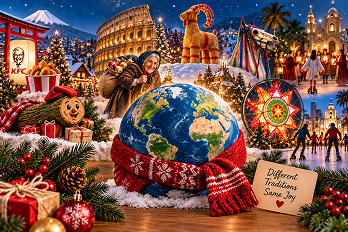
Christmas is celebrated across the globe, but the way people observe the holiday varies dramatically depending on local history, folklore, religion, and climate. While many households look forward to decorated evergreen trees, stocking stuffers, and family feasts on December 25, international holiday celebrations encompass a far wider spectrum of fascinating customs.
From centuries-old alpine folklore characters and festive horse processions to modern food trends and community light festivals, exploring international holiday practices offers a remarkable glimpse into regional history and culture. Depending on where you live, holiday preparations might involve hiding broomsticks, sharing fried chicken with family, crafting giant paper-lantern art, or roller-skating to early-morning services.
A custom that feels unfamiliar to an international observer is often a cherished, meaningful ritual to the community that practices it. Exploring these unusual Christmas traditions around the world highlights the rich diversity of global holiday celebrations and shows how different cultures adapt the season to create their own lasting memories.
What Are Some Unusual Christmas Traditions Around the World?
Unusual Christmas traditions around the world include Japan’s festive KFC dinners, Austria’s Krampus processions, Italy’s Epiphany witch La Befana, Iceland’s thirteen mischievous Yule Lads, and Wales’s Mari Lwyd horse custom. Other unique international traditions feature Catalonia’s Caga Tió log, Mexico’s Las Posadas processions, and Venezuela’s morning roller-skating services, reflecting diverse global folklore, foods, and community celebrations.
Overview of Global Christmas Traditions
| Tradition | Country/Region | What Makes It Unique? |
|---|---|---|
| KFC Christmas | Japan | Holiday family meals centred around fried chicken party buckets. |
| Krampus | Austria & Central Europe | Alpine folklore parades featuring a horned winter figure accompanying St Nicholas. |
| The Christmas Pickle | United States (disputed German origins) | Hiding a pickle-shaped ornament on the tree for children to find on Christmas morning. |
| La Befana | Italy | A gift-bringing folklore figure who visits children on the eve of Epiphany. |
| The Yule Lads | Iceland | Thirteen distinct folklore figures who visit homes during the thirteen nights before Christmas. |
| Mari Lwyd | Wales | A winter custom featuring a decorated horse skull figure brought house to house with song. |
| Caga Tió | Catalonia (Spain) | A wooden log "fed" by children before delivering small treats on Christmas Eve. |
| Las Posadas | Mexico & Latin America | Nine nights of festive community processions re-enacting Mary and Joseph's search for shelter. |
| Roller-Skating Services | Venezuela (Caracas) | Commuting to early-morning holiday church services on roller skates. |
| Giant Lantern Festival | Philippines (San Fernando) | Elaborate, giant illuminated paper-and-metal lanterns displayed in community competition. |
| Gävle Goat | Sweden | Constructing a massive straw Yule Goat in the town square each Advent season. |
| Christmas Sauna | Finland | A deeply ingrained Christmas Eve custom of physical and symbolic purification in the sauna. |
| Christmas Crackers | United Kingdom | Decorative paper tubes popped at holiday meals containing crowns, jokes, and gifts. |
| The Christmas Spider | Ukraine | Decorating trees with spiderweb ornaments to bring good fortune for the new year. |
| Night of the Radishes | Mexico (Oaxaca) | A Christmas season competition showcasing intricately carved radish sculptures. |
15 Unusual Christmas Traditions Around the World
1. KFC Christmas
-
Country/Region: Japan
-
What Happens: On Christmas Eve and Christmas Day, thousands of families across Japan enjoy party buckets of fried chicken, seasonal cake, and festive side dishes ordered from Kentucky Fried Chicken.
-
Why Is It Interesting: Because Christmas is not a traditional religious holiday for the majority of Japan's population, holiday customs developed around modern commercial and social traditions.
-
Cultural/Historical Context: The custom began in 1974 following a highly successful national marketing campaign titled "Kurisumasu ni wa Kentakkii!" (Kentucky for Christmas!). The campaign filled a market gap for organised Christmas meal traditions, creating a modern commercial custom that has endured for over five decades.
-
Good-to-Know Fact: Demand for festive chicken buckets is so high that orders are frequently placed weeks in advance to avoid long holiday queues.
2. Krampus Parades
-
Country/Region: Austria, Southern Germany, and the Alpine Region
-
What Happens: During early December—particularly on Krampusnacht (December 5)—performers wear elaborate wooden masks, sheepskin costumes, and heavy iron bells to process through towns as Krampus, a horned figure from Alpine folklore.
-
Why Is It Interesting: Unlike gentle holiday figures, Krampus presents a dramatic, frightening appearance meant to warn mischievous children to behave.
-
Cultural/Historical Context: In traditional Alpine folklore, Krampus serves as a winter companion to St Nicholas. While St Nicholas rewards well-behaved children on his feast day, Krampus accompanies him to deal with those who have misbehaved.
-
Good-to-Know Fact: Traditional Krampus masks are hand-carved from wood by regional artisans, a craft preserved across generations.
(Suggested Image: A traditional carved wood Krampus mask during an Alpine winter parade. ALT text: An Austrian performer wearing a carved wood Krampus mask and horned costume during an Alpine winter festival.)
3. The Christmas Pickle
-
Country/Region: United States (often incorrectly attributed to Germany)
-
What Happens: A glass ornament shaped like a green pickle is hidden deep within the branches of the decorated Christmas tree. On Christmas morning, the first child to locate the pickle receives an extra small gift or a token of good fortune for the coming year.
-
Why Is It Interesting: Despite being widely described as an ancient European tradition, the custom is largely unfamiliar to citizens in Germany today.
-
Cultural/Historical Context: The popular claim that the "Weihnachtsgurke" is a traditional German custom is widely disputed by folklore historians. Most evidence suggests the practice originated or was commercialised in the United States during the late 19th century when German-imported glass ornaments—including fruit and vegetable shapes—became widely sold.
-
Good-to-Know Fact: Surveys conducted in Germany indicate that the majority of German households have never heard of or practised the Christmas pickle tradition.
4. La Befana
-
Country/Region: Italy
-
What Happens: On the night of January 5 (the eve of Epiphany), a kindly, soot-covered figure riding a broomstick visits children's homes across Italy to leave candy, fruit, or small toys in stockings.
-
Why Is It Interesting: Gift-giving in Italy is strongly tied to the Epiphany season, with La Befana serving as a central holiday figure alongside or in place of Santa Claus (Babbo Natale).
-
Cultural/Historical Context: According to Italian Christian folklore, the Wise Men stopped at La Befana's home to ask for directions to Bethlehem. She declined to join them initially but later regretted her decision and set out on her broomstick with gifts to find the child, visiting homes every year in her search.
-
Good-to-Know Fact: Children often leave a small glass of wine and a plate of local food for La Befana instead of the milk and cookies left for Santa.
5. The Yule Lads (Jólasveinar)
-
Country/Region: Iceland
-
What Happens: Across the thirteen nights leading up to Christmas Day, thirteen distinct folklore figures—the Yule Lads—visit children one by one. Children place a shoe in their bedroom window each night; well-behaved children receive small gifts or treats, while misbehaved children might find a raw potato.
-
Why Is It Interesting: Rather than a single gift-giver, Icelandic tradition features thirteen mischievous brothers, each with a specific trait or trick, such as Gluggagægir (Window Peeper) or Kertasníkir (Candle Stealer).
-
Cultural/Historical Context: Rooted in old Icelandic mountain folklore, the Yule Lads were historically depicted as frightening tricksters. Over the 20th century, their image softened into benevolent, festive figures while retaining their playful personalities.
-
Good-to-Know Fact: The Yule Lads are accompanied in folklore by their mother, Grýla, and the giant Christmas Cat (Jólakötturinn), who wanders the countryside during the holidays.
6. Mari Lwyd
-
Country/Region: Wales (United Kingdom)
-
What Happens: During the winter holiday season, groups carry the Mari Lwyd—a horse skull mounted on a pole, decorated with ribbons and draped in a white sheet—from house to house. The group engages in a traditional rhyming song duel (Pwnco) with residents before being invited inside for refreshments.
-
Why Is It Interesting: The dramatic visual of a horse skull decorated with festive ribbons entering a home can seem striking to outsiders, but it is a celebrated emblem of Welsh folk heritage.
-
Cultural/Historical Context: Mari Lwyd is a pagan-rooted winter folk custom that was revived across Wales in the 20th century to celebrate regional language, poetry, and folk music traditions.
-
Good-to-Know Fact: Winning the Pwnco rhyming battle is said to bring good luck to the household for the entire upcoming year.
7. Caga Tió (Tió de Nadal)
-
Country/Region: Catalonia (Spain)
-
What Happens: Starting on the Feast of the Immaculate Conception (December 8), Catalan families set out a hollow wooden log styled with a painted smiley face, wooden front legs, and a red barretina hat. Children "feed" the log dried fruit and nuts each night. On Christmas Eve, children sing traditional songs while tapping the log with sticks so it will "poop" out small gifts, candies, and turrón nougat.
-
Why Is It Interesting: The tradition uses playful humour to engage children in holiday gift-giving rituals.
-
Cultural/Historical Context: Rooted in rural agrarian traditions, the burning or tapping of the Christmas log originally symbolised bringing warmth, light, and nature's bounty into the home during the winter solstice.
-
Good-to-Know Fact: The Caga Tió usually supplies small shared treats, candies, and nuts, while larger holiday presents are reserved for the Three Kings Day (Epiphany).
8. Las Posadas
-
Country/Region: Mexico and parts of Latin America
-
What Happens: From December 16 to December 24, communities organise nine consecutive nights of candlelit processions. Participants dress as Mary and Joseph, walking to designated homes to ask for lodging through traditional songs, culminating in a festive neighbourhood gathering with food and star-shaped piñatas.
-
Why Is It Interesting: The multi-night celebration transforms entire neighbourhoods into active street theatres, combining religious devotion with community hospitality.
-
Cultural/Historical Context: Originating during the 16th century, Las Posadas (meaning "the inns") commemorates the biblical journey of Mary and Joseph from Nazareth to Bethlehem. The nine nights represent the nine months of pregnancy.
-
Good-to-Know Fact: The traditional star-shaped piñata used during Las Posadas features seven points, historically symbolising the seven deadly sins being overcome.
9. Roller-Skating Services
-
Country/Region: Venezuela (Caracas)
-
What Happens: In the days leading up to Christmas Eve, residents in Caracas commute to early-morning church services (Misa de Aguinaldo) on roller skates.
-
Why Is It Interesting: Transforming a morning religious commute into a citywide roller-skating event creates a unique, festive street atmosphere.
-
Cultural/Historical Context: The custom gained popularity in the mid-20th century as a cheerful community activity. In several neighbourhoods, streets were historically closed to motorised traffic until 8:00 AM to allow skaters safe passage.
-
Good-to-Know Fact: It is a fun local urban tale that children would tie a string around their big toe and dangle the end out their window so passing skaters could give it a gentle tug to wake them up.
10. Giant Lantern Festival (Ligligan Parul)
-
Country/Region: Philippines (San Fernando, Pampanga)
-
What Happens: Held on the Saturday before Christmas Eve, the city of San Fernando hosts a major festival showcasing massive, intricate illuminated lanterns (parol) built by local villages.
-
Why Is It Interesting: The lanterns measure up to 20 feet in diameter and feature thousands of micro-switched lightbulbs synchronised to festive music.
-
Cultural/Historical Context: The Philippines celebrates one of the longest Christmas seasons in the world, beginning as early as September. The lantern festival evolved from simple bamboo-and-paper stars used to light the way to early-morning Christmas novena masses into an internationally recognised artistic tradition.
-
Good-to-Know Fact: Due to its rich history of lantern craftsmanship, San Fernando is widely recognised as the "Christmas Capital of the Philippines".
11. The Gävle Goat (Gävlebocken)
-
Country/Region: Sweden (Gävle)
-
What Happens: Every year at the beginning of Advent, a giant 40-foot-tall straw Yule Goat (Julbocken) is erected in Castle Square in Gävle.
-
Why Is It Interesting: While built as a peaceful community display, the giant goat has drawn global attention over the decades due to public curiosity surrounding whether it will survive through Christmas Day without being damaged by unauthorised vandals.
-
Cultural/Historical Context: The Yule Goat is a Scandinavian Christmas symbol dating back centuries, long predating Santa Claus as the region's primary holiday figure. The giant straw version in Gävle was first created in 1966 to attract visitors to the town centre.
-
Good-to-Know Fact: Despite strict security measures, fire retardant coatings, and 24-hour webcams, the goat has been destroyed by unauthorised fires dozens of times since its inception.
12. Christmas Eve Sauna
-
Country/Region: Finland
-
What Happens: On Christmas Eve afternoon, Finnish families prepare and enjoy a quiet, relaxing session in the sauna before evening meals and gift-giving begin.
-
Why Is It Interesting: While saunas are part of daily life in Finland, the Joulusauna is approached as a special ritual of physical relaxation and mental calm before the holiday festivities start.
-
Cultural/Historical Context: In Finnish culture, the sauna has historically been viewed as a sacred space associated with health, purity, and quiet reflection. Ancient Finnish folklore even held that a "sauna elf" (saunatonttu) protected the space and required respect from bathers.
-
Good-to-Know Fact: Silence or quiet speaking is traditionally observed in the Christmas sauna to maintain a restful environment.
13. Christmas Crackers
-
Country/Region: United Kingdom, Australia, Canada, and New Zealand
-
What Happens: Before eating the main Christmas meal, diners pull decorative paper-wrapped cardboard tubes apart with a partner. The tube snaps with a loud "pop", revealing a tissue paper crown, a small gift, and a printed joke or riddle inside.
-
Why Is It Interesting: Wearing colourful paper crowns throughout the holiday dinner is a standard holiday sight across the UK and Commonwealth nations.
-
Cultural/Historical Context: Invented in London by confectioner Tom Smith in the 1840s, the cracker was inspired by French bonbons. He added the chemical friction "snap" mechanism to make opening the sweet wrappers more exciting.
-
Good-to-Know Fact: Holiday etiquette dictates that everyone—regardless of age—wears their paper crown during dinner, leading to humorous formal family photos.
14. The Legend of the Christmas Spider
-
Country/Region: Ukraine
-
What Happens: Christmas trees across Ukraine are traditionally decorated with delicate spiderweb ornaments made of beads, wire, or shimmering paper.
-
Why Is It Interesting: While spiders and webs are often associated with autumn holidays elsewhere, in Ukrainian folk heritage, finding a spiderweb on Christmas morning is considered a symbol of good luck and prosperity.
-
Cultural/Historical Context: The tradition stems from a folk tale about a poor widow who could not afford to decorate a tree for her children. According to the story, friendly spiders spun webs across the tree overnight, which turned into silver and gold threads when illuminated by the morning sun.
-
Good-to-Know Fact: Spider ornaments are often hidden on the tree as a fun game for children to spot on Christmas morning.
15. Night of the Radishes (Noche de Rábanos)
-
Country/Region: Mexico (Oaxaca)
-
What Happens: On December 23, the city of Oaxaca hosts an artistic exhibition and competition where local craftsmen carve large, specially grown radishes into elaborate nativity scenes, historical figures, and regional folklore displays.
-
Why Is It Interesting: Radishes are transformed into intricate, temporary works of folk art displayed for only a few hours.
-
Cultural/Historical Context: The custom dates back to the colonial period when farmers carved vegetables at the local Christmas market to attract shoppers to their produce stalls. In 1897, the city officially established the carving event as an annual competition.
-
Good-to-Know Fact: The radishes used for the festival are grown in dedicated soil treated to allow them to reach oversized, unusual shapes suitable for carving.
Christmas Traditions by Region
To understand how geographic context shapes holiday customs, it helps to examine regional trends across continents:
Global Holiday Customs Breakdown
-
Europe: Rich folklore figures (Krampus, Yule Lads, La Befana). Ancient folklore, winter solstice symbolism, and unique gift-giving characters emphasise community storytelling and winter comfort.
-
Latin America: Community street processions (Las Posadas, Skating). Centred around vibrant community participation, outdoor street gatherings, music, and multi-day religious pageants.
-
Asia: Modern commercial & craft displays (KFC Japan, Lanterns). Features dynamic modern adaptations and public craft art where commercial creativity takes centre stage.
-
North America: Hybrid imported customs & family games (pickle ornament). Blends diverse cultural imports with modern family games.
Why Do Christmas Traditions Differ Around the World?
Holiday celebrations develop over time through a combination of factor influences:
-
Regional Climate: Winter traditions in northern Europe emphasise indoor warmth, fires, and saunas, while Southern Hemisphere celebrations in Australia or South America feature beach outings and outdoor barbecues.
-
Historical Folklore: Pre-Christian winter solstice customs frequently merged with local Christian practices over centuries, creating regional folklore figures like La Befana and Krampus.
-
Local Culinary Resources: Holiday foods reflect indigenous crops and regional trade—ranging from tropical fruits in Latin America to seasonal radishes in Oaxaca or imported tea and cocoa.
-
Modern Media & Culture: Commercial innovation and global communications continue to shape modern customs, as seen in Japan's fried chicken holiday meal traditions.
Some of the Most Surprising Traditions to Discover
If you are looking for customs that contrast most sharply with standard Western holiday expectations, these five stand out for international readers:
-
KFC Christmas (Japan): Replacing traditional roast dinners with buckets of fast-food fried chicken.
-
Krampus Parades (Austria): Celebrating winter alongside a frightening folklore figure clad in fur and wooden masks.
-
Caga Tió (Catalonia): Incorporating a friendly, hollow wooden log that "delivers" small gifts to children.
-
Mari Lwyd (Wales): Welcoming a decorated horse skull figure into homes with singing and poetry.
-
Night of the Radishes (Mexico): Transforming oversized root vegetables into complex architectural folk art.
Misunderstood Christmas Traditions: Setting the Record Straight
Separating documented cultural history from internet urban legends is crucial when discussing global heritage:
-
The Christmas Pickle Origin: While widely marketed as an ancient German tradition, the pickle search game is primarily an American commercial creation that is virtually unknown in modern Germany.
-
Understanding Krampus: Krampus is not "evil Santa". In traditional Alpine lore, he serves as a complementary winter figure alongside St Nicholas, emphasising moral balance and community folklore.
-
La Befana vs. Halloween: Despite riding a broomstick, La Befana is entirely unrelated to Halloween or dark folklore; she is a beloved, maternal figure in Italian Christmas and Epiphany celebrations.
How to Respect Christmas Traditions When Travelling
If you travel internationally during the holiday season, keep these cultural etiquette tips in mind:
-
Practice Open-Minded Curiosity: Approach unfamiliar customs with interest rather than labelling them as "strange" or "weird".
-
Follow Local Guidelines: Respect local norms during religious processions, such as Las Posadas in Mexico or early-morning church services in South America.
-
Ask Before Taking Photographs: Always seek permission before photographing performers in traditional folklore attire or local family gatherings.
-
Support Local Craftsmen: Purchase hand-carved ornaments or local festival foods to support regional artisans who maintain traditional holiday crafts.
Fun Christmas Traditions to Learn About With Kids
Exploring global customs is a fantastic educational activity for children during the holiday countdown:
-
Map the Traditions: Find each country mentioned in this guide on a world map or globe.
-
Try a Regional Recipe: Prepare a simple international treat, such as Spanish turrón, British Christmas crackers, or Mexican hot chocolate.
-
Learn International Greetings: Teach kids how to say "Merry Christmas" in different languages, such as Frohe Weihnachten (German), Feliz Navidad (Spanish), or Mele Kalikimaka (Hawaiian).
-
Craft an International Decoration: Make paper snowflakes, straw Yule goats, or paper star lanterns inspired by the Giant Lantern Festival.
Want to explore these international customs while counting down to December 25? Use the XmasApplication Christmas Countdown to make every day of the holiday season engaging, explore tools like the Christmas Card Maker, and plan your family's seasonal activities!
Conclusion
The wide variety of unusual Christmas traditions around the world demonstrates that there is no single "correct" way to celebrate the holiday season. Whether centred around ancient folklore figures like Krampus and La Befana, vibrant community gatherings like Las Posadas, or creative modern trends like Japan's KFC dinners, every custom offers a window into the values and creativity of the people who practise it.
Exploring global holiday customs reminds us that behind every unfamiliar ritual lies a shared desire to gather with loved ones, bring warmth to the winter season, and create lasting family memories.
As you prepare for your own holiday celebrations in 2026, consider incorporating an educational story, international recipe, or fun global craft into your routine. To stay organised and track the days remaining until Christmas, check out the XmasApplication Christmas Countdown and enjoy a truly global holiday season!