
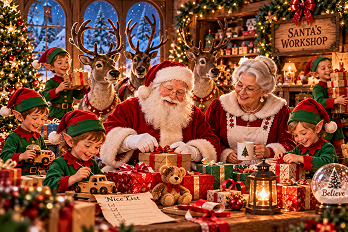
The holiday season brings a wonderful sense of magic, anticipation, and warmth to homes around the world. At the heart of this festive season is the legendary figure of Santa Claus, who travels across the night sky to deliver presents to children everywhere. But in classic Christmas stories and traditional holiday tales, delivering millions of smiles in a single night is far too big a job for just one person.
Santa relies on a dedicated team of festive companions to keep the magic running smoothly. From the busy workshops at the North Pole to the starry skies above, a whole community works behind the scenes. In popular holiday folklore, Santa’s helpers include:
-
Santa’s Elves: The creative craftspeople who design, build, and wrap gifts.
-
Mrs Claus: Santa’s caring partner who keeps the North Pole organised and full of holiday cheer.
-
The Flying Reindeer: The swift aerial team that guides Santa’s sleigh around the globe.
-
Real-Life Helpers: Parents, teachers, volunteers, and children who spread kindness in their local communities.
Together, these characters and everyday heroes embody the true spirit of the season: giving, kindness, and joy.
Who Are Santa’s Helpers?
When people ask, "Who are Santa’s helpers?", they are usually thinking of the magical figures who live in the North Pole. According to holiday folklore, Santa’s helpers are the dedicated characters who prepare presents, organize schedules, look after the sleigh, and make sure everything is ready for Christmas Eve.
However, the idea of a "Santa's helper" extends beyond fictional stories. In the real world, anyone who performs a kind act, helps a neighbor, or shares a holiday gift acts as a helper to Santa. Whether in classic fairytales or everyday neighborhood acts of goodwill, Santa’s helpers are individuals who work together to make the holiday season magical for everyone.
Santa’s Elves
In Christmas literature and films, Santa’s elves are perhaps the most famous helpers of all. Depicted as small, agile, and cheerful beings with pointed ears and festive outfits, these elves are the backbone of the North Pole's daily operations.
In popular Christmas stories, their primary responsibilities include:
-
Building and Crafting Toys: Transforming raw materials into wooden toys, dolls, electronic games, and puzzles.
-
Checking the List: Assisting Santa as he reviews his famous list of good deeds throughout the year.
-
Gift Wrapping: Decorating present boxes with colourful paper, ribbons, and handwritten name tags.
-
Taking Care of the Workshop: Keeping the North Pole neat, organised, and decorated with garlands and lights.
-
Preparing the Sleigh: Loading heavy sacks of presents securely onto Santa’s flying sleigh before takeoff.
These whimsical characters remind us of the value of hard work, craftsmanship, and teamwork during the festive rush.
How Many Elves Does Santa Have?
One of the most frequent questions children ask is, 'How many elves does Santa actually have?'
In Christmas folklore, there is no official or fixed number. Different storybooks, holiday specials, and movies picture the North Pole in their own unique ways. Some stories depict a cosy, small village with just a few dozen master craftspeople, while other modern films imagine massive, high-tech operations with thousands of bustling workers.
Because Santa’s elves belong to the world of imagination and storytelling, their numbers can be as small or as large as your holiday imagination allows.
Where Do Santa’s Elves Come From?
The modern image of Santa’s elves did not appear overnight. Instead, it grew over time from a blend of European folklore, Scandinavian customs, 19th-century poetry, and popular media.
-
European Folklore: Early European tales often featured small, magical nature spirits, goblins, or household fairies who lived near human dwellings.
-
Scandinavian Traditions: In Nordic folklore, figures like the Nisse or Tomte were small homestead guardians who cared for farms, looked after animals, and were rewarded with a bowl of warm porridge at Christmas.
-
19th-Century American Literature: During the 1800s, American writers and illustrators began combining these ancient household spirits with the character of Santa Claus. Publications such as Clement Clarke Moore’s famous poem, A Visit from St Nicholas (commonly known as 'Twas the Night Before Christmas), famously referred to Santa himself as a "right jolly old elf".
-
Modern Storytelling: By the late 19th and early 20th centuries, magazines and children's books fully established the idea of a dedicated community of small, toy-making elves living together at the North Pole.
Today's friendly Christmas elves are a creative tapestry woven from centuries of cultural traditions and family storytelling.
Who Is Mrs Claus?
Mrs Claus is a beloved figure in modern Christmas tradition, portrayed as Santa’s steadfast partner and the heart of the North Pole home.
First appearing in American literature in the mid-19th century, Mrs. Claus has evolved across generations of stories. While her character varies depending on the book or movie, she is traditionally depicted as:
-
Santa’s Supportive Partner: Managing the household and ensuring Santa eats well and stays warm during the chilly winter months.
-
A North Pole Director: Supervising workshop tasks, helping the elves stay on schedule, and tending to the reindeer.
-
A Master Baker: Preparing delicious trays of gingerbread cookies, warm mince pies, and hot cocoa for the hard-working team.
-
A Caring Mentor: Offering warm advice, patience, and festive cheer to everyone around her.
In contemporary holiday books, Mrs. Claus often steps into active leadership roles, driving the sleigh, solving Christmas Eve challenges, or managing the complex logistics of global gift delivery.
How Do Santa’s Reindeer Help Him?
Santa’s sleigh could not leave the ground without his legendary aerial team: the flying reindeer. According to festive folklore, these magical animals provide the speed, strength, and navigation needed to travel around the world in a single night.
The nine classic reindeer made famous in poetry and song are:
-
Dasher: Known for exceptional speed and enthusiasm.
-
Dancer: Nimble, graceful, and quick on her hooves.
-
Prancer: Strong, proud, and energetic.
-
Vixen: Famous for cleverness and agility.
-
Comet: Bright, fast, and friendly to children.
-
Cupid: Bringing affection, warmth, and cheer.
-
Donder (or Donner): Derived from the Dutch word for thunder, representing strength.
-
Blitzen: Derived from the Dutch word for lightning, representing lightning speed.
-
Rudolph: The famous ninth reindeer whose glowing red nose cuts through dark fogs and winter blizzards to guide the path.
In storybooks, the reindeer require special care, including fresh magic oats, clear skies, and plenty of rest before their big flight on Christmas Eve.
What Happens Inside Santa’s Workshop?
In Christmas tradition, Santa’s workshop is a place of wonder, creativity, and non-stop festive preparation. Imagined as a cosy wooden building surrounded by snowdrifts—or a vast, colourful hall filled with glowing hearths—the workshop is where the holiday spirit takes physical form.
Inside the workshop, traditional stories describe several key areas:
-
The Toy Assembly Line: Where classic wooden trains, teddy bears, and modern games are crafted and assembled.
-
The Wrapping Station: A vibrant space filled with miles of colourful paper, sticky tape, and satin bows.
-
The List Room: Where letters from children around the world are carefully read, sorted, and catalogued.
-
The Mailroom: A hub for receiving holiday mail and sending out festive notes.
-
The Sleigh Bay: Where the magic sleigh is polished, checked for safety, and loaded with heavy gift sacks.
Through these imaginative scenes, storytellers highlight the values of craftsmanship, organization, and joy in work.
Are All Santa’s Helpers Magical?
While elves, talking reindeer, and magical sleighs make wonderful bedtime stories, not all of Santa's helpers live at the North Pole! In fact, the most essential helpers of all exist right here in our everyday world.
Every December, ordinary people step into the role of Santa’s helpers by spreading goodwill, comfort, and cheer. Real-life helpers include:
-
Parents and Guardians: Who work tirelessly to plan holiday meals, wrap gifts, and create magical family memories.
-
Teachers and Carers: Who organise holiday plays, direct music pageants, and teach children the value of sharing.
-
Postal Workers and Delivery Drivers: Who work long hours in cold weather to ensure holiday cards and packages reach loved ones safely.
-
Volunteers and Charity Workers: Who collect food, distribute warm clothes, and manage gift drives for families in need.
-
Healthcare Workers and First Responders: Who work through the holidays to keep communities safe, healthy, and cared for.
When we show compassion, generosity, and kindness to those around us, we carry on the true purpose of Santa Claus.
Can Children Become Santa’s Helpers?
Absolutely! Children do not need magic dust or pointy shoes to become Santa’s helpers. Anyone, no matter how small, can make a meaningful difference during the holiday season.
Here are simple, safe, and actionable ways kids and families can spread Christmas joy:
-
Make Handmade Cards: Create colourful holiday greeting cards for family members, teachers, or elderly neighbours. You can use an online Christmas card maker to design custom holiday greetings together.
-
Donate Unused Toys: Gather gently used toys, books, or games and donate them to local charities or children's hospitals.
-
Share Festive Greetings: Send warm, thoughtful messages to relatives living far away. Explore ideas for heartfelt Christmas wishes to write inside your family notes.
-
Help Around the House: Assist parents with household chores, bake Christmas treats, or help decorate the living room tree.
-
Include Others: Invite a classmate who seems lonely to join in a holiday game or lunch table conversation.
-
Support Local Giving Drives: Participate in school or community canned-food drives to help stock food pantries for winter.
-
Create Holiday Decor: Craft paper snowflakes or tree decorations. Check out fun Christmas decoration ideas to spruce up your home.
-
Spread Cheer Online: Share family memories safely by making a custom photo using a Christmas Photo Maker to send to grandparents.
By practising simple acts of kindness, children discover that giving can be even more rewarding than receiving.
Fun Facts About Santa’s Helpers
-
"Elves" Were Once Giant: In early Germanic and Norse legends, magical beings varied greatly in size; it was only 19th-century American poetry that permanently made Santa’s elves small and merry.
-
Rudolph is a 20th-century Addition: While the original eight reindeer were introduced in an 1823 poem, Rudolph was created over a century later in 1939 as part of a promotional holiday booklet for a department store.
-
Reindeer Love Lichen: In real life, arctic reindeer survive tough winter months by eating a hardy tundra plant called reindeer moss or lichen.
-
Mrs. Claus’s First Name Varies: Because she belongs to general folklore rather than a single copyrighted book, Mrs. Claus has been given many different first names in stories, including Mary, Jessica, Holly, and Martha!
-
The Post Office Helps Santa: In several countries, national postal services run official programmes where postal volunteers respond to letters sent to the North Pole every year.
Spread Christmas Joy Today
You don't need a trip to the North Pole to experience the wonder of Christmas. By sharing warmth, helping those in need, and creating happy moments with loved ones, anyone can step into the shoes of Santa’s helpers this season.
Ready to start spreading holiday cheer? You can track the arrival of Christmas Day using a Christmas Countdown Timer, organise your family gift shopping with a Christmas Budget Planner, or discover fun Christmas family activities to enjoy with your children.